Tire and Rubber Association of Canada Announces 2026 Industry Leadership Awards Winners
Photo: Winners of TRAC's 2026 Industry Leadership Awards. Left to right: Chris Figel…
Continue Reading
Aug 6
| With an onslaught of new technology possibilities, the tire industry has moved far beyond the days of tires serving as simple rounds of black rubber. Today, the sector sits at an intersection of advanced engineering, digital connectivity, and formidable environmental stewardship. To get an insider look at this evolution, TRAC sat down with Ernest Bedia, CEO of Pirelli Canada, to discuss technology, leadership, and the future of tires. |  |
Motorsport DNA and the Premium Focus
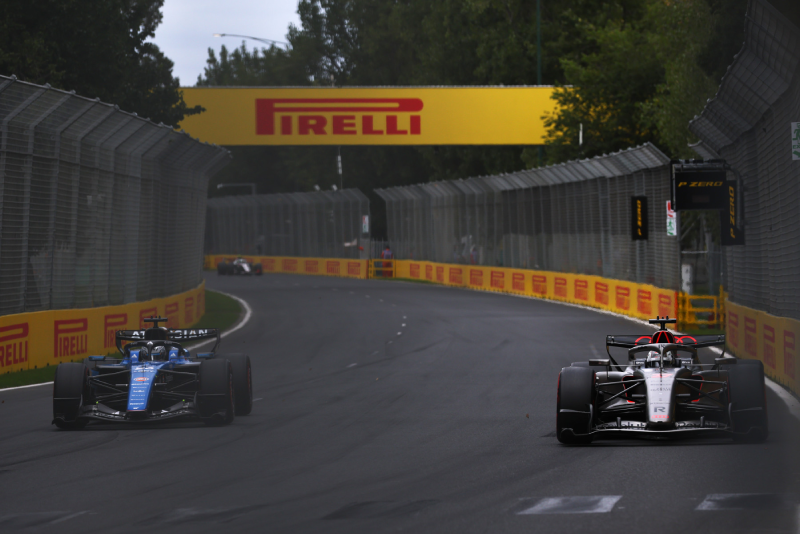
With 12 years at Pirelli under his belt, and serving as Vice President of Pirelli Motorsport, North America, Bedia understands the brand’s identity intimately. Known globally for its premium and prestigious focus, Pirelli brings a unique high-performance pedigree to Canadian roads, including a robust portfolio of winter tires engineered specifically for harsh Canadian climates. Of course, much of Pirelli’s engineering edge is forged on the tracks of competitive racing.
Image courtesy of Pirelli Canada.
“Pirelli has been the exclusive tire partner of the FIA Formula One World Championship since 2011,” Bedia says. “This role allows us to develop and test cutting-edge technologies in one of the most demanding environments in the world. The knowledge gained through motorsport helps accelerate innovation and contributes directly to the development of our road tire products.”
For Bedia, one of the most rewarding aspects of the industry is how deeply integrated tire development is with automotive design itself. “One thing that may surprise other TRAC members is the extent to which Pirelli’s innovation model is driven by close collaboration with automotive manufacturers,” Bedia shares. “A significant portion of our product development involves creating highly customized tire solutions designed specifically for individual vehicle platforms. These partnerships often begin years before a vehicle reaches the market.”
The Active Tire: Cyber Tyre™ and Electrification
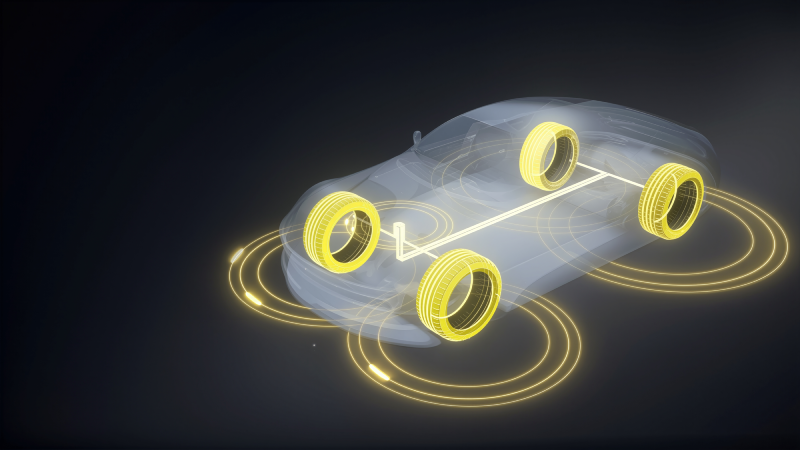
The modern vehicle ecosystem is undergoing a massive transformation driven by three distinct forces: electrification, digitalization, and sustainability. Pirelli’s answer to this digital evolution is both visionary and revolutionary. Its Cyber Tyre™ technology represents the world’s first integrated tire system capable of collecting and communicating real-time data from sensors embedded directly within the tire.
Image courtesy of Pirelli Canada.
“Cyber Tyre represents a significant step forward in connected mobility, enabling vehicles to receive precise information about tire condition, pressure, temperature, load, and road interaction,” Bedia explains. “Beyond the technology itself, Cyber Tyre demonstrates how innovation is transforming the role of the tire from a passive component into an active source of data within the vehicle ecosystem.”
Closing the Loop on Sustainability
Bedia emphasizes that sustainability must be embedded across the entire value chain. This includes sourcing renewable materials, optimizing manufacturing efficiency, and finding creative ways to handle end-of-life tires.
A prime example of this commitment is Pirelli’s collaboration with Bolder Industries at its factory in Rome, Georgia. The partnership focuses on recovering and reusing carbon black from end-of-life tires. “Through advanced recycling processes, recovered carbon black can be reintroduced into the production cycle,” Bedia notes. “This helps reduce dependence on virgin raw materials while supporting circular economy principles.”
Educating the Consumer
Despite broader consumer education about tire technologies, Bedia acknowledges a significant communication gap still exists with the consumers. He sees a massive opportunity to shift the consumer mindset. “Tire technology and associated tire performances are developing at a very rapid pace,” Bedia observes. “I find that there’s a challenge, but also an opportunity, to further educate consumers in these advancements and the performance benefits on the vehicle, expanding the value discussion outside of just price or historical sales.” He believes the industry can do a better job utilizing media and third-party tire testing to showcase performance benefits tailored to specific needs, especially regarding original equipment and EV-specific tires.
A Visionary Approach to Leadership
Before taking the helm at Pirelli Canada, Bedia was responsible for the original equipment business for Pirelli North America. It was a role that tested his ability to align diverse corporate divisions to secure new partnerships with traditional automakers and emerging EV startups. By uniting R&D, operations, and commercial teams, Pirelli aggressively expanded its customer base into EV-specific, track performance, and all-terrain tire fitments in a market historically focused heavily on European vehicles.
This collaborative success directly mirrors Bedia’s broader leadership philosophy, which he describes as firmly visionary. “I often communicate to the entire organization the strategy for the business, inviting each of the departments to provide contributions that lead to the common goals,” Bedia says. “I am a fan of developing employees, encouraging everyone to take on higher levels of responsibilities. It is beneficial for employees to understand how each job supports a greater directive and vision.”
Tire Industry Career Advice
For those looking to enter the industry today, Bedia’s advice is simple: stay adaptable, remain curious, and embrace continuous learning. “This industry is far more technologically advanced than many people realize and sits at the intersection of mobility, engineering, sustainability, manufacturing, and digital innovation,” he says. It is this constant evolution that makes his work so engaging, which is why when asked to choose just one word to describe the modern tire industry, Bedia doesn’t hesitate: “transformative.”
The Power of TRAC
Reflecting on the role of the Tire and Rubber Association of Canada, Bedia highlights that the biggest hurdles facing the industry, such as regulatory shifts and long-term sustainability goals, require a united front.
“Associations such as TRAC play a critical role in strengthening the Canadian tire and rubber industry by providing a platform for collaboration, knowledge sharing, and advocacy. Many of the challenges facing our industry are larger than any individual organization. TRAC provides significant value by creating opportunities for engagement across the industry and helping members stay informed about emerging issues, policy developments, and market trends,” Bedia concludes.
Beyond the Pirelli Desk
When he isn’t shaping the strategic direction of Pirelli Canada, Bedia is an avid outdoorsman who embraces Canada’s four seasons, spending his weekends and vacations hiking, mountain biking, or skiing with his family. He is also deeply passionate about the automotive world outside of work, regularly attending car meets, club activities, and hitting track days with friends from the industry. This love for exploration and history extends to his travels as well; his favourite place in Canada is Quebec City because of how beautifully the city’s history has been preserved.
Tire and Rubber Association of Canada
5409 Eglinton Ave W, Suite 208
Etobicoke, ON M9C 5K6
Tel: (437) 880-8420
Email: [email protected]